Uniswap Ruling Sets Precedent Amidst Macro Headwinds and Altcoin Divergence
A federal judge ruled in favor of Uniswap, setting a key legal precedent for DeFi developers, while NEAR surged on a new privacy feature and HyperLiquid's token outperformed amidst broader inflation concerns.
The digital asset market navigates a complex environment, with significant legal clarity emerging for decentralized finance (DeFi) platforms even as broader macroeconomic and regulatory pressures persist. A recent federal court ruling in favor of Uniswap against allegations of assisting crypto 'rug pulls' marks a pivotal moment for open-source development and platform liability.

Manhattan federal judge Katherine Polk Failla dismissed a class-action lawsuit against Uniswap Labs and founder Hayden Adams. The suit attempted to hold them liable for scam cryptocurrencies traded on the platform. Judge Failla's decision emphasized that merely creating an environment where fraud could exist is not equivalent to affirmatively assisting in its perpetration. Hayden Adams characterized this as a "sensible outcome," reinforcing the principle that open-source smart contract developers are not liable for the misuse of their code by third-party scammers.
"If you write open source smart contract code, and the code is used by scammers, the scammers are liable, not the open source devs."
This ruling provides a crucial legal precedent, potentially shielding other decentralized protocols and their developers from similar broad liability claims. It delineates the responsibility between platform providers and malicious actors, a distinction vital for the continued innovation and growth of the DeFi sector. The decision arrived as the industry faces increasing scrutiny over stablecoin rewards and the broader Digital Asset Market Clarity Act in the U.S. Senate, where banking lobbyists continue to push back against crypto's ability to offer yield on stablecoin accounts.
Altcoin Performance Divergence
Amid these legal developments, individual altcoins are exhibiting notable divergence in performance. NEAR Protocol's token, NEAR, surged by 17%, extending a 40% weekly rally following the launch of its "Confidential Intents" feature. This private execution layer aims to mitigate Maximal Extractable Value (MEV) by allowing users to toggle into confidential accounts, shielding trade details from public view. This innovation is specifically designed to attract institutional trading flow by offering discretion while maintaining auditability, distinguishing it from traditional privacy coins like Monero or Zcash.
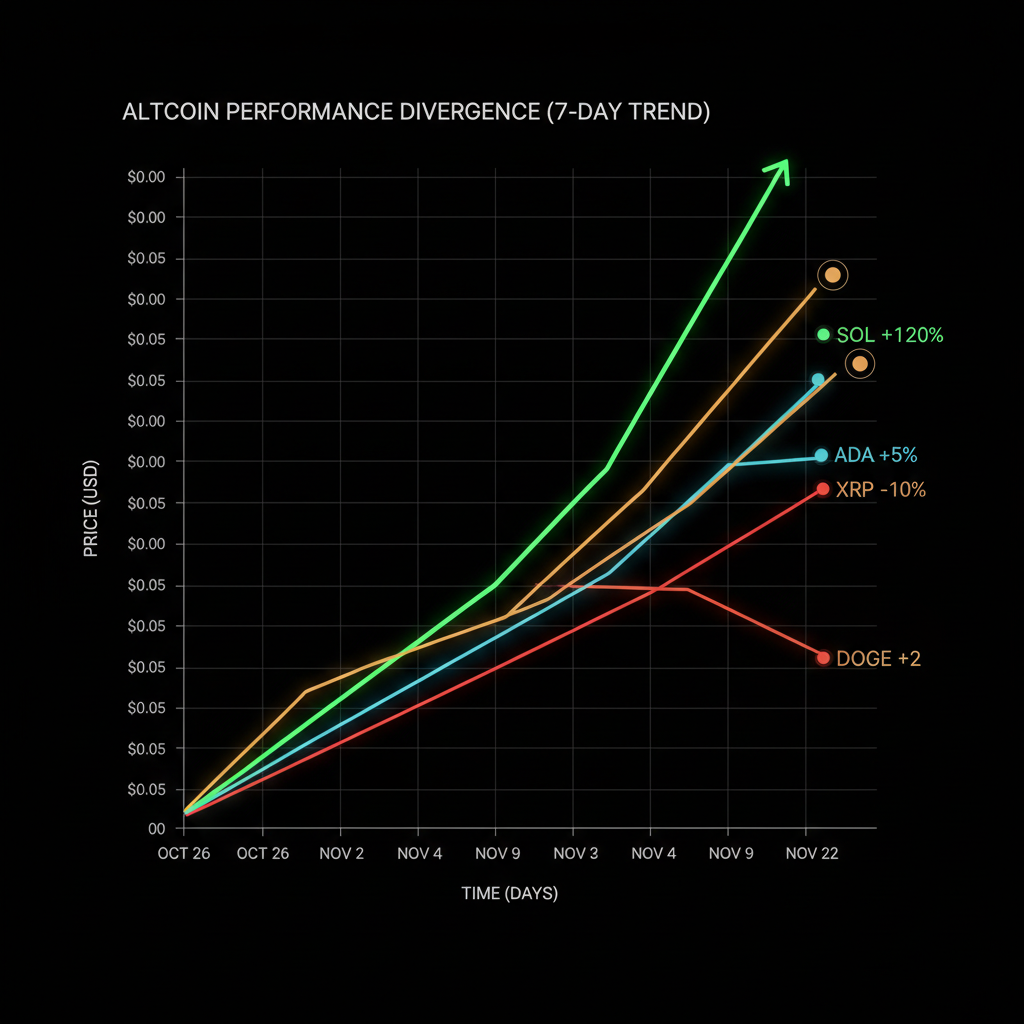
Conversely, other market segments show resilience in differing ways. HyperLiquid's native token, HYPE, has seen a 23.9% year-to-date increase, outperforming both Bitcoin and Ether during a period of market turbulence. HyperLiquid, a decentralized derivatives exchange, thrives on volatility, monetizing activity through perpetual futures and weekend equity trading. Its monthly trading volume exceeded $200 billion in both January and February, demonstrating that platforms built to capture fees on trading activity can decoupled from broader spot market downturns.
Macroeconomic Headwinds Persist
While specific crypto projects achieve legal clarity or exhibit strong individual performance, the overarching macroeconomic landscape presents continued challenges. Wall Street is signaling renewed inflation concerns, primarily driven by geopolitical tensions in the Middle East. Treasury yields saw their largest daily jump since October, with oil prices spiking over 6% after disruptions in the Strait of Hormuz. This has pushed back expectations for Federal Reserve rate cuts, with traders now pricing the first cut no earlier than September. The prospect of sustained higher interest rates could temper the bullish outlook for risk assets, including cryptocurrencies.
The Uniswap ruling offers a clear legal win for open-source DeFi, but market participants should remain cognizant of the broader macro environment. The interplay between regulatory clarity, project-specific innovation, and persistent inflation concerns will dictate market dynamics in the coming months. Projects offering tangible solutions to market inefficiencies, such as NEAR's MEV reduction or HyperLiquid's volatility monetization, are likely to command attention.