Solana Faces Critical Test as Sell Pressure Mounts Amid Broader Market Decoupling
Solana faces significant sell pressure and a potential 38% price drop if it breaches $77, while Bitcoin shows resilience by decoupling from traditional equities and gold despite a strong US Dollar Index.
The cryptocurrency market is exhibiting a notable divergence: Bitcoin demonstrates resilience against a backdrop of global stock market declines and rising geopolitical tensions, yet Solana (SOL) finds itself under increasing sell pressure. While the US Dollar Index (DXY) reaches a three-month high, typically a bearish signal for risk assets, Bitcoin has managed to hold above $68,000, decoupling from traditional equities and even gold, which saw a 4.3% drop.

This resilience in BTC is attributed to robust institutional demand, evidenced by $1.5 billion in recent ETF net inflows. However, Solana is not sharing in this strength. Recent market dynamics suggest that SOL is vulnerable to a significant price crash, with key support levels under threat.
Solana's Vulnerable Position
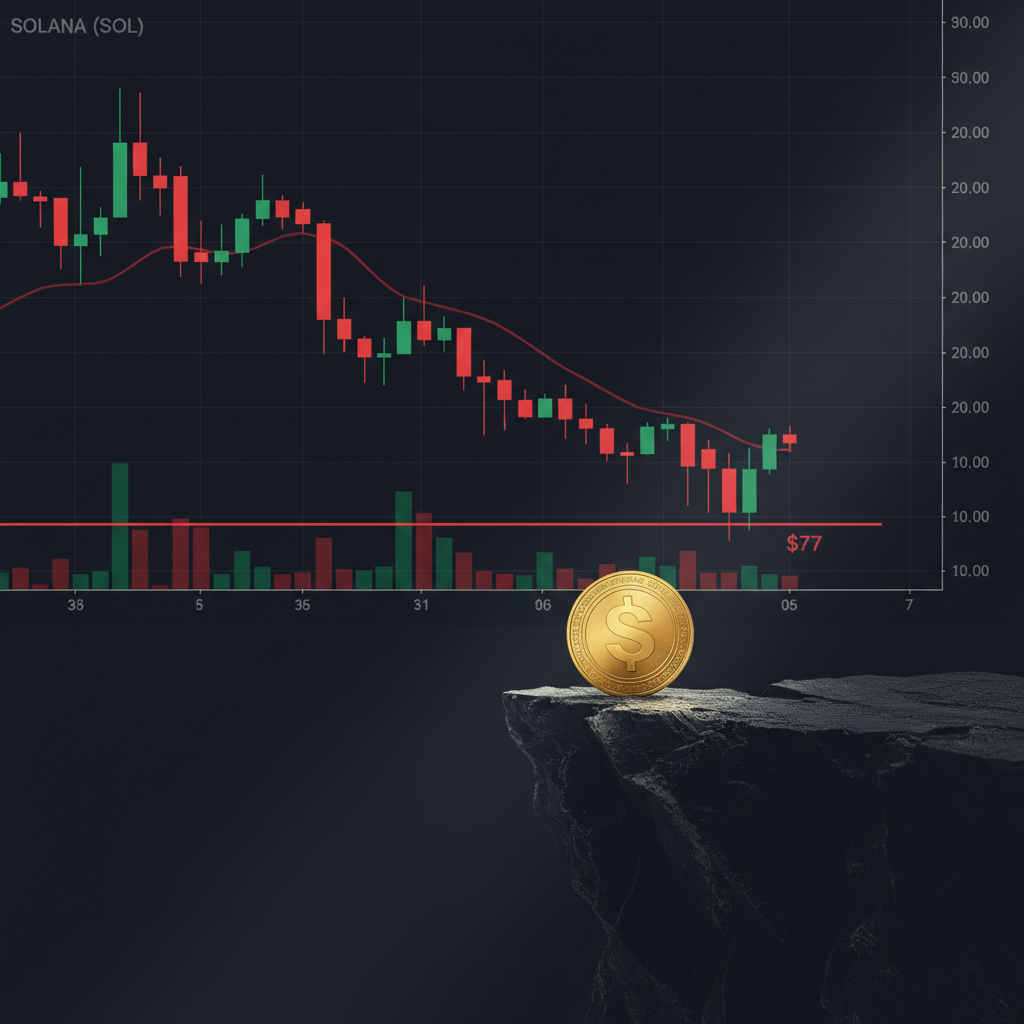
Solana has been consolidating between $87 and $77 in recent weeks, but the underlying sentiment points to weakness. A critical indicator, the Long-Term Holder vs. Short-Term Holder Net Unrealized Profit/Loss (LTH vs. STH NUPL), shows a concerning trend. Since February, short-term holders (STHs) have seen their unrealized profits steadily climb. STHs are typically quick to realize profits, and this behavior is contributing to increased selling pressure on Solana. Crucially, there is no corresponding rise in profits among long-term holders (LTHs), which means less stabilization from those typically less prone to panic selling.
The absence of significant LTH profit rise means less stabilization, raising the risk of intensified selling in the Solana market.
If the $77 support level breaks, technical analysis suggests a potential drop of up to 38%, pushing SOL towards $51. This bearish outlook is compounded by a broader macro momentum shift, indicating a weakening price structure for Solana. Exchange net position changes also reflect heightened inflows, a direct sign of increased selling interest from market participants.
Bitcoin's Decoupling and Macro Headwinds
While Solana struggles, Bitcoin’s recent performance stands in stark contrast. Despite the Nasdaq 100 Index dropping 1% and gold prices falling 3.6%, BTC successfully defended the $68,000 level. The 30-day rolling correlation between Bitcoin and the Nasdaq 100 has dropped to 69% after peaking at 92% a week prior, indicating a significant decoupling. This suggests that in times of heightened geopolitical uncertainty, such as the ongoing US-Iran conflict, some investors are increasingly viewing Bitcoin as a safe-haven asset, or at least one that operates independently of traditional market fears.
The strengthening DXY, reaching 99.4, typically signals a risk-off environment where investors seek safety in cash and government bonds. Historically, DXY strength has correlated with negative returns for Bitcoin. However, Bitcoin's current resilience in the face of DXY gains suggests a shift in its market identity. This divergence is significant and warrants close monitoring, especially as the CFTC chair Michael Selig teases progress on crypto perpetual futures, which could further integrate digital assets into broader financial structures.
For Solana, the immediate focus remains on the $77 support. A sustained breach below this level would confirm a bearish flag pattern and validate the downside targets. Traders should monitor exchange inflows and the LTH vs. STH NUPL for further indications of selling exhaustion or intensification.