Geopolitical Tensions Drive Divergent Altcoin Performance
While Bitcoin navigates geopolitical volatility around $66,000, select altcoins like HYPE and JUP are outperforming due to strong supply compression narratives and increased utility.
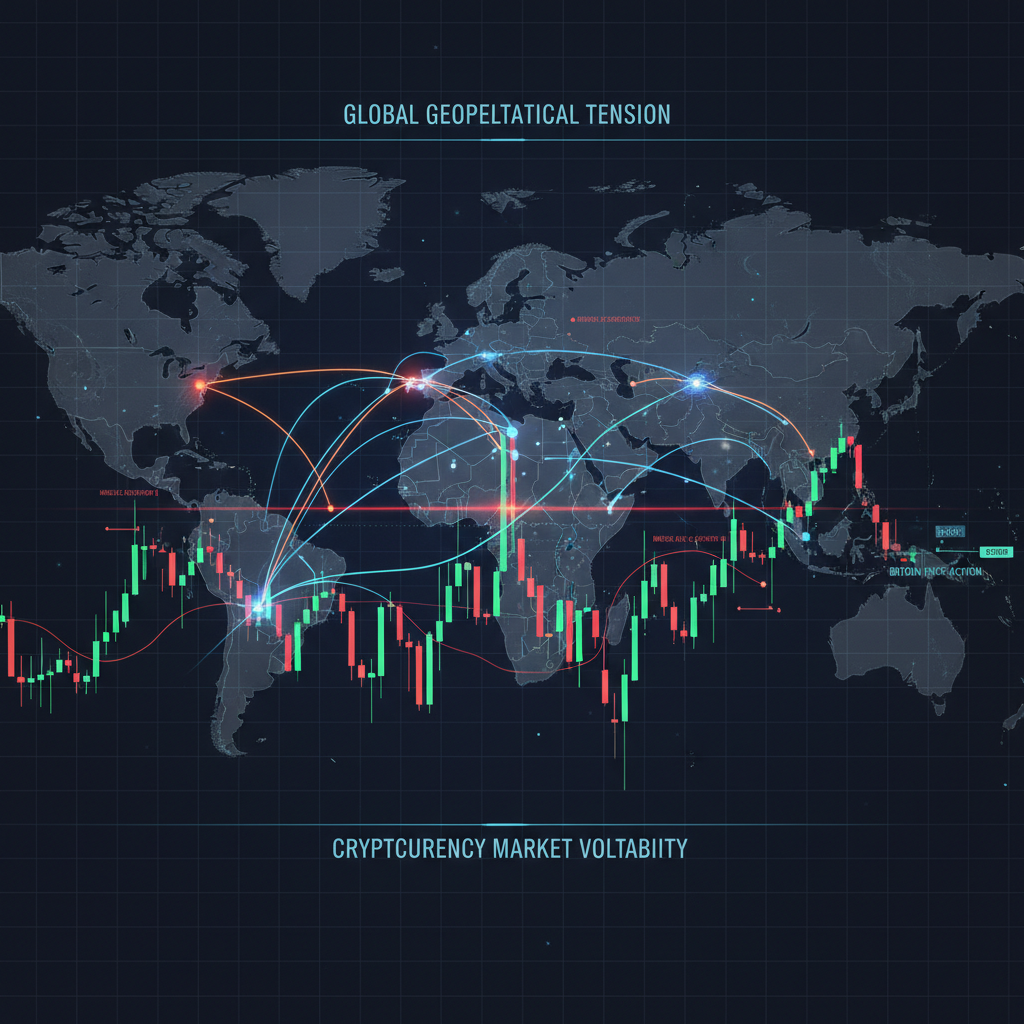
Bitcoin has weathered initial fallout from the Iran conflict, avoiding a major sell-off despite weekend strikes. While BTC traded near $66,500 after touching lows around $63,000, the broader market remains under pressure, with many top assets posting losses. However, this period of heightened geopolitical tension and general market decline has highlighted the resilience and unique drivers behind select altcoins and DeFi tokens.
Supply Compression Narratives Gain Traction
Amidst the macro uncertainty, specific altcoins are demonstrating strength, often driven by supply-side mechanics. Hyperliquid's HYPE token, for instance, surged by 5% even as a $316 million token unlock (2.7% of released supply) looms on March 6. This counter-intuitive performance is attributed to a significant increase in trading activity on the decentralized exchange, particularly in oil futures, which boosted fee revenue. Hyperliquid's fee mechanism channels these earnings into HYPE buy-backs and burns. The protocol generated $2.8 million in fees over the past 24 hours and burned $9.22 million worth of tokens in seven days, a 20.4% increase from the prior period. This accelerated burn rate has effectively offset concerns about the impending unlock, leading traders to bet on limited net supply growth.
Similarly, Jupiter's JUP token has seen gains, up 13% in the last week. This follows a late-February governance vote that approved eliminating net-new emissions for 2026, freezing planned supply expansions. These examples underscore a growing market appreciation for tokens with strong supply discipline or mechanisms that actively reduce circulating supply, even in a bearish environment.

Bitcoin's Unfinished Correction
While some altcoins find specific catalysts, Bitcoin's current rebound to the $66,000 range should be viewed with caution. Despite avoiding a deeper plunge, analysis suggests that BTC's decline has not yet reached a “maximum pain point” for retail investors. The Sharpe Ratio, a measure of risk-adjusted return, has fallen to levels seen at previous cycle bottoms (2019, 2020), suggesting moderate risk for current buyers. However, historical patterns indicate that this low Sharpe Ratio can persist for a period, implying further downside potential. Analysts project a highly probable bearish scenario where Bitcoin could test the $48,000–$52,000 range before a true capitulation occurs. This implies that while the geopolitical shock to Bitcoin was contained, fundamental correction dynamics may still be at play. Traders eyeing long entries are watching $62,200 as a potential support level, with some even anticipating a brief pump above $74,000 to trap late buyers before a more significant downturn.
The market's response to geopolitical stress is bifurcated: Bitcoin holds the line, but a deeper correction may still loom, while altcoins with strong supply mechanics find independent momentum.
Investors should monitor both Bitcoin's ability to maintain its current range and the ongoing performance of altcoins driven by unique, tokenomic-focused narratives. The coming weeks will test the resilience of these divergent trends, particularly as more token unlocks, like those for Ethena (ENA) and RedStone (RED), add over $572 million in new supply across the market.